

A weekly relationship check-in gives everyday concerns a place to go before they turn into guesses or resentment. Start with one specific question: what felt supportive this week, and what would make next week easier?
Choose a time and format that both of you can use freely. The conversation can include appreciation, a practical concern and one small agreement; it does not need to become a scorecard or a test of love.
A check-in you can actually use
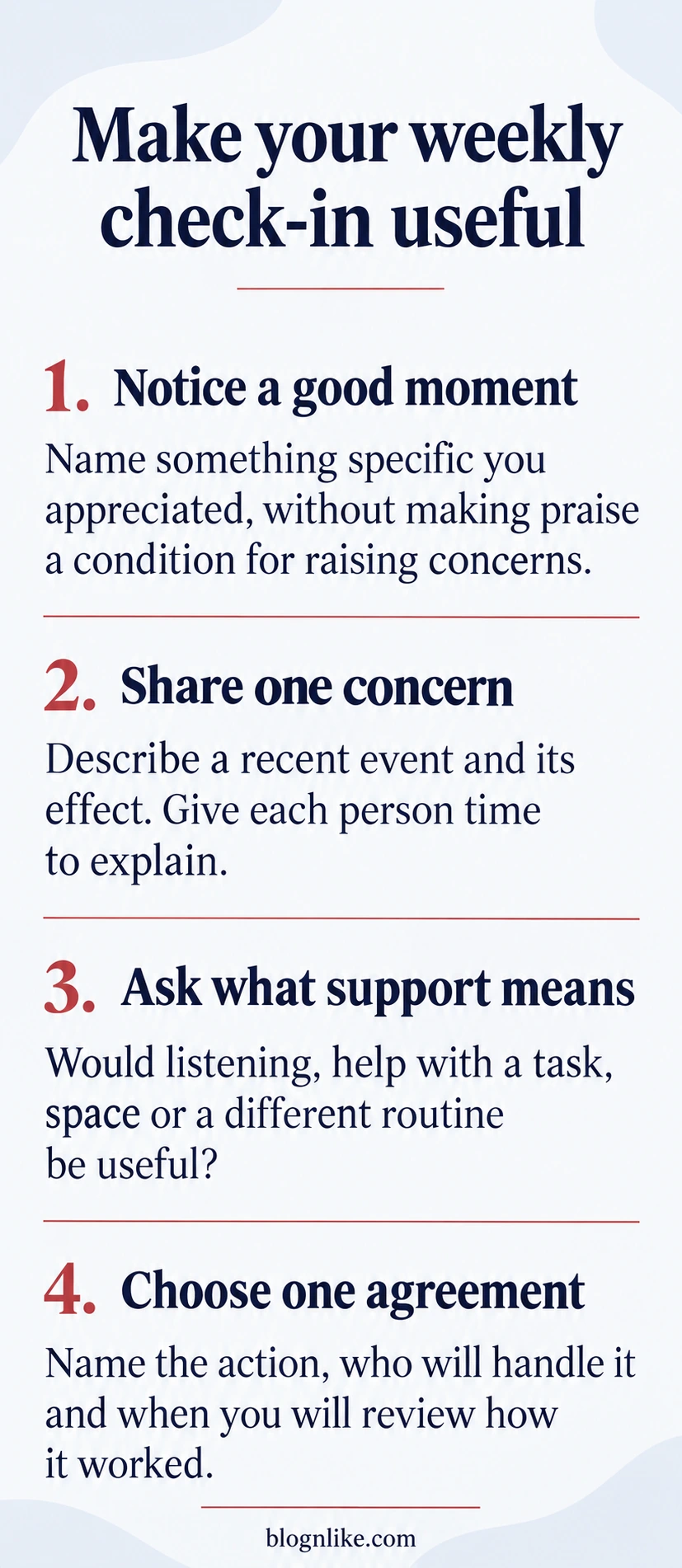
Read the guide as text
- Notice a good moment. Name something specific you appreciated, without making praise a condition for raising concerns.
- Share one concern. Describe a recent event and its effect. Give each person time to explain.
- Ask what support means. Would listening, help with a task, space or a different routine be useful?
- Choose one agreement. Name the action, who will handle it and when you will review how it worked.
Asking the Right Questions with a Purpose
Decide that the check-ins are for understanding the week and then planning small changes. This isn't a trial or a performance review, and it doesn't mean that all issues are going to be resolved immediately.
You can say something like, "Can we spend a few minutes understanding what worked this week and pick one thing to make next week easier?" This is an example about time, not a certain duration. Some couples need less time, and others need shorter conversations.
Always ask for permission to talk about sensitive topics. If one person is exhausted, pick a different meeting time instead of trying to talk about things that matter when they're not at their capacity. A regular conversation can make room for concerns that otherwise get lost in daily demands. Use the questions here as a flexible starting point.
Talking About Your Connections
It's important to ask questions that are useful, such as "When did you feel close to me?" and "When did I make you feel alone when we were together?" This allows room for different answers. One partner might want to talk about it, and the other might want quiet companionship. If someone wants time alone, it doesn't mean that someone is withdrawing from the relationship.
Physical affection means you should ask if they would like more hugs or more affection. This isn't a requirement for what the other person wants, and for any physical or sexual activity, you should still ask for consent.
For couples who live long distances apart, ask whether the current communication is supportive enough. A daily call might be comforting for one but exhausting for another, depending on work, caregiving, and time zones. The agreement should leave both people feeling connected and able to live their daily lives.
Keep Things Simple and Make an Effort Together
When you and your partner are getting ready to talk about your relationship, you don't need to prepare a long list of everything that's been bothering you. Sometimes it's easier to start with three simple things: something you appreciate about your partner, something that's been concerning you, and something you'd like to change. This gives both people a chance to share their feelings without making the conversation feel like a list of complaints.
Try focusing on things that happened recently instead of bringing up every disagreement you've had in the past. For example, you might say, "When our dinner plans changed on Tuesday, I wasn't sure whether I should start cooking or wait for you." This gives your partner a specific situation to understand instead of saying something like, "You never think about my time." The goal is to recognize patterns and find ways to improve things, not make your partner feel like they're being blamed for everything.
It's also important that both people take responsibility for making these conversations happen. If you're always the one scheduling time to talk, bringing up concerns, remembering agreements, and reminding your partner about changes, it can start to feel like you're doing all the work in the relationship.
One thing that might help is taking turns starting the conversations or keeping track of anything you've agreed to work on. Maybe one week you bring up the discussion, and the next week your partner does. If writing everything down feels too formal, you can simply talk about your plans and set a reminder that works for both of you.
The important thing is finding a way to communicate that makes it feel comfortable and realistic. Maintaining a healthy relationship shouldn't fall on one person's shoulders. Both partners need to be willing to listen, participate, and follow through on the things they've discussed.
Start by Recognizing the Little Things
When you sit down to talk about your relationship, try starting with something positive you've noticed about your partner. You might ask, "Was there something I did this week that made you feel loved or appreciated?" You can also ask, "Is there something you'd like us to do more often?" These simple questions can help both people understand what makes the other feel cared for.
Try to be specific when sharing what you appreciate. For example, saying, "I really appreciated you picking up my prescription when I had to work late," helps your partner understand exactly what meant something to you. But saying something like, "You were good this week," can make it sound like you're grading their behavior instead of recognizing their effort.

Even when you've had a difficult week, you might still notice something your partner did that made things a little easier. Maybe they helped with something around the house, listened when you needed to talk, or made time for you when things were busy. Recognizing those efforts can remind both of you that there are positive parts of the relationship worth appreciating.
But you shouldn't feel like you have to say something nice just to earn the right to talk about a serious problem. Showing appreciation is important, but it shouldn't prevent either person from expressing concerns or discussing something that's hurting the relationship.
If talking about appreciation feels uncomfortable at first, try starting with something simple you've noticed. For example, you might say, "I noticed we actually had a couple of relaxing evenings together this week." Then talk about what made those evenings possible.
Maybe you finished dinner earlier, had fewer commitments, or made an effort to put your phones away and spend time together. Paying attention to what went well can help you find small things worth repeating.
Sometimes improving a relationship isn't just about fixing problems. It's also about recognizing what's already working and finding more ways to enjoy those experiences together.
Understanding the Workload
Find out what took more energy, because this can help figure out what the other person can handle, such as appointment planning, emotional support for relatives, financial help, or managing health conditions.
It's important to ask which responsibilities need more help, more time, or lower standards. This kind of answer might mean that things need to change a little bit instead of encouraging someone else to work harder.
Avoid limiting the conversation to who did the most work. Remembering a school deadline or noticing that supplies are low should also be given attention. Pay attention to the responsibilities, including the follow-through.
An Example of Working Through a Problem Together
Imagine a couple who have recently been having disagreements about their evening routine, especially when it comes to dinner. They decide to sit down and talk about what's been bothering them. Instead of jumping straight into the problem, they start by talking about something they enjoyed together, like taking a walk earlier in the week. Then one partner explains that the most frustrating part of the week was not knowing whether the other person would be home for dinner.
The other partner explains that unexpected meetings at work have made it difficult to know exactly when they'll get home. As they continue talking, they begin to understand each other's concerns. One person doesn't want to waste time preparing a meal that might not get eaten, while the other person needs a little flexibility when work runs late. Neither person is necessarily doing anything wrong, but their expectations haven't been clear.
They decide to try something different. On days when there are late meetings, they'll plan to eat separately unless they confirm their dinner plans earlier in the afternoon. This way, neither person has to wait around or worry about making arrangements at the last minute. They also agree to talk about how the new routine is working the following week.
Of course, this doesn't mean every scheduling problem in their relationship will suddenly disappear. But it shows how talking about one specific concern can help couples find a solution that works for both of them. Instead of blaming each other, they're listening, explaining their needs, and making a small change together.
The important thing is that both people feel comfortable sharing their feelings, suggesting changes, and speaking up when something isn't working. A healthy relationship should allow room for compromise without either person feeling pressured or punished for having different needs.
Talk About One Problem at a Time
When you and your partner sit down to talk about your relationship, try focusing on one concern instead of bringing up several problems at once. Pick something that's been bothering you and that you both have enough time to discuss. You might start by asking, "Was there something that happened this week that we should talk about?" Then explain what happened, how it made you feel, and what you'd like to change.
For example, you might say, "When you kept joking about my job after I asked you to stop, I felt embarrassed, especially because our friends were there. I'd really appreciate it if we could leave that topic out of our jokes." This helps your partner understand exactly what bothered you instead of simply saying that they never respect your feelings.
It's also important for the person listening to make sure they understand what's being said before responding. They might say something like, "So you felt embarrassed because I continued joking after you asked me to stop, and you'd like me to respect that boundary." This doesn't mean they have to agree with every part of the conversation, but it shows they're making an effort to understand.
Sometimes a small concern can lead to a much bigger issue that needs more attention. If that happens, it's okay to agree to talk about it another time when you both have enough time and energy. Keeping your regular conversations short doesn't mean you're ignoring serious problems. It simply means you're giving those concerns the attention they deserve instead of trying to work through everything at once.
Find Out What Kind of Support Your Partner Needs
Sometimes when your partner is having a difficult day, your first reaction might be to offer advice or try to fix whatever is bothering them. But that isn't always what they need. Sometimes they just want someone to listen, while other times they might appreciate help with a particular task or a little time to themselves.
Instead of assuming you know what would make them feel better, try asking something like, "Do you want me to listen, help you figure something out, or give you a little space?" This gives your partner a chance to explain what would actually help instead of leaving both of you feeling frustrated.
Remember that what someone needs can change depending on the situation. Just because your partner wanted advice about a problem last week doesn't mean they'll want the same thing today. Asking again shows that you're paying attention to how they're feeling instead of assuming their needs will always stay the same.
You can also ask what that support would look like in everyday life. For example, if your partner needs help with something around the house, talk about which task would make things easier. If they just want someone to listen, pick a time when you can both sit down without distractions or feeling rushed.
But it's also important to be honest about what you're able to offer. You might say, "I can listen for a few minutes right now, but I'd really like to talk more after dinner when I can give you my full attention." This lets your partner know that you care without making promises you might not be able to keep.
Supporting each other doesn't mean you have to be available every minute of the day or put your own responsibilities aside. What matters is being willing to communicate, understand each other's needs, and find ways to offer support that feel comfortable and realistic for both of you.
Have One Agreement
A good agreement names an action, an owner, and a time period. You could talk about communicating better, or you can talk about a time limit, such as communicating if someone is 30 minutes late. One is undefined, and the other is observable.
Start with a small change because making a bunch of promises can hide under regular demands. A small change that happens gives more information than a list that neither person can handle nor remember.
Figure out what can get in the way of the agreement and how to make agreements realistic. A partner who can't use a phone during work might need a different arrangement than someone who has access to a phone all the time.
Ask if both people are picking the agreement freely. Exhaustion, silence, or a need to end the conversation can look like consent. Ask if the agreement works for them or if they're agreeing because they're tired and make room for honest answers.
Handling Communication Needs
Some people need to process information by speaking it out loud, and others need time to think quietly. Share the main question ahead of time, such as by writing notes, talking, or leaving a voice message, which can be followed by a discussion.
Partners with different language skills can slow down and avoid jokes during sensitive topics. People dealing with tiredness, pain, or sensory overload might need a better setting and more flexible timing.
Do not use the format to deny the other person a chance to speak. A written check-in needs to not become one partner's statement with no chance to respond. A verbal conversation shouldn't need immediate answers to address the complicated questions.
It's important to pick a fair way to take turns and allow for a pause period. Being accessible is part of the conversation, but it doesn't mean that one person's needs are more important than the others or that every talk has to happen the same way.
Getting Needed Support
If either person raises their voice or becomes too overwhelmed to listen, take time to pause and then return later to talk about it. The break should protect the conversation instead of making it a race. If the same situation happens every week without movement, think about getting relationship support.
A check-in should never be a substitute for safety when there are threats of stalking, forced sexual contact, or financial control. You don't owe a disclosure that puts you at risk.
Love is respect explains the difference between healthy, unhealthy and abusive relationship patterns. That distinction matters more than completing a weekly ritual.
If an agreement gets ignored repeatedly, talk about the pattern and the effect instead of just rewriting the promise over and over again. A consistent refusal to respect your needs should be information you listen to. You can reconsider the arrangement, get individual support, or make decisions without just improving the meeting format.
If you miss a week, go back without talking about a penalty. Ask whether the time made attendance hard, and if it did, try to adjust it.
A couple working rotating shifts might use a written exchange and meet to talk about it on a shared day off. The purpose is to pay attention and not to keep an unbroken record. A flexible routine can be better than an appointment that keeps having conflicts and interfering with real responsibilities.
Staying Curious
After having different meetings, ask, "Are these conversations making life easier?" You might pay attention to seeing fewer scheduling surprises, being able to make easier requests, or being more confident about bringing up a concern. These changes matter even if you still disagree about things.
You should ask if the conversation feels fair. Does one person talk and not listen most of the time? Is appreciation sincere? Remove questions that no longer help and make room for the answers you are hearing. Add a new one when situations change, such as "What's going to happen during school holidays?"
A good check-in can leave both people with more understanding and clear next steps. It doesn't require a perfect meeting, and the routine should stay small enough to continue, while remaining honest and flexible enough to make the relationship better.
Build a focused weekly check-in agenda
Choose one focus and a meeting style for an agenda you can copy and adapt together.
A check-in must leave room for an honest no or a pause. It cannot make a coercive or unsafe relationship safe.
Use the questions and examples in the article above; the draft builder needs JavaScript.
15 questions readers ask
1. What is a weekly relationship check-in?
It is a planned conversation about connection, concerns and practical arrangements. Both people should be able to speak, decline a topic or request a pause.
2. How long should it take?
Choose a manageable window together. A brief focused conversation can be more useful than a long meeting when either person is tired.
3. Which question should we ask first?
Try asking what felt supportive this week. Then ask what made life harder and what one change might help.
4. Do we need to meet every week?
No. Choose a rhythm that suits your schedules and revisit it when work, health or caregiving changes.
5. What if my partner dislikes meetings?
Offer a walk, a short call or a written exchange followed by time to respond. The format should work for both people.
6. Should we keep notes?
A short note about an agreed task can help. Avoid secret records, grading each other or keeping a dossier of mistakes.
7. How do we discuss unequal housework?
Name the full task, including noticing, planning and follow-through. Discuss ownership and capacity rather than simply counting visible chores.
8. Can we talk about sex?
Yes, if both want that discussion. Ask about comfort and preferences without turning affection or sex into a weekly obligation.
9. What if the conversation becomes heated?
Pause and agree on a realistic time to return if it is safe. A pause should not become punishment or an indefinite refusal to discuss concerns.
10. What if we disagree about what happened?
Separate observations from interpretations and listen for the practical need. You can make a clear future agreement without settling every disputed detail.
11. Do we have to start with praise?
No. Appreciation can be useful, but nobody needs to earn permission to discuss harm or a serious concern.
12. What makes an agreement useful?
A useful agreement names an action, an owner and a review point. Check that both people choose it freely and can realistically carry it out.
13. What if agreements are repeatedly ignored?
Discuss the pattern and its impact. Repeating the same promise is not progress; consider additional support or whether the arrangement is acceptable.
14. Can a check-in fix an abusive relationship?
A meeting format cannot make threats, coercion or control safe. Seek confidential specialist support rather than relying on better communication to stop abuse.
15. Can spiritual reflection be part of it?
If both welcome it, a shared reflection or prayer can open the conversation. It should leave room for disagreement and practical action.