

Wondering whether you love someone or are afraid of being alone does not require choosing between two neat explanations. Both feelings can exist. These questions can help you consider affection, everyday treatment, practical concerns and the support you need to make your own choices.
Notice the feelings that are present
You can care about a partner and also fear loneliness. You might feel affection, comfort, desire, habit, worry or several things at once. No single feeling proves that you are in love or that the relationship is wrong. Give yourself room to name the mix without forcing an immediate answer.
Ask about a recent ordinary moment: “What did I enjoy about being with this person?” Then ask what you wanted that was missing. Concrete examples are easier to consider than trying to award the relationship a score or decide whether every feeling is pure.
Look at the relationship you have now
Consider how you are treated, whether you can make choices and what everyday life together is like. Enjoying someone’s strengths does not mean you must love every action or accept every arrangement. A concern about disrespect or incompatible plans does not make your affection false.
Separate a realistic request from a hoped-for transformation. Asking someone to keep an agreement is different from wanting them to become a different person. Notice whether they understand a concern and what changes actually follow, rather than building your whole decision around potential.
Ask what fear is asking you to protect
Fear of being alone may include missing company, worrying about the future or facing practical changes in housing, income, caregiving or community. Those concerns deserve attention. They do not show that you are weak, and they cannot be resolved by simply telling yourself to enjoy independence.
Try a question such as: “If I had more support, what would I want to consider?” You do not have to pretend that practical barriers have disappeared. Identifying a concern can help you choose a manageable next step without making a decision before you are ready.

Build support that does not depend on a relationship decision
A trusted friend, an activity you enjoy or appropriate individual support can give you room to think. You can seek connection while still wanting romance, and you do not have to become perfectly comfortable alone before you deserve a considerate relationship.
If loneliness is part of what you are experiencing, connection and support while single offers small options that may also be useful while you reflect. Choose something that fits your access, energy and circumstances rather than treating social activity as another test to pass.
Choose a next step that fits your circumstances
You might decide to observe a recurring pattern, discuss one concern, seek individual advice or make a practical plan. A conversation could begin: “I care about you, and I want to talk about how our time together is feeling.” If it is safe to discuss, make a specific request and allow room for both answers.
If you fear threats, retaliation or control, you do not need to confront a partner privately or prove that your feelings are justified before seeking confidential help. Love is respect’s relationship spectrum can help you consider those patterns alongside questions of compatibility.
You can take uncertainty seriously without treating it as a verdict. Caring about someone does not require staying, and choosing to stay does not prevent you from asking for something to change. Let your next step address what you actually know and what you need now.
Try two short lists before the next major decision
You may enjoy how a partner listens while feeling afraid of losing weekend company. Write down the aspects of the relationship you value. Separately, list needs you would want help with if you spent more time on your own.
Then see what kind of support is available independently, such as a standing plan with a friend or help making a household budget. A practical option can give you more room to think about the relationship on its own terms.
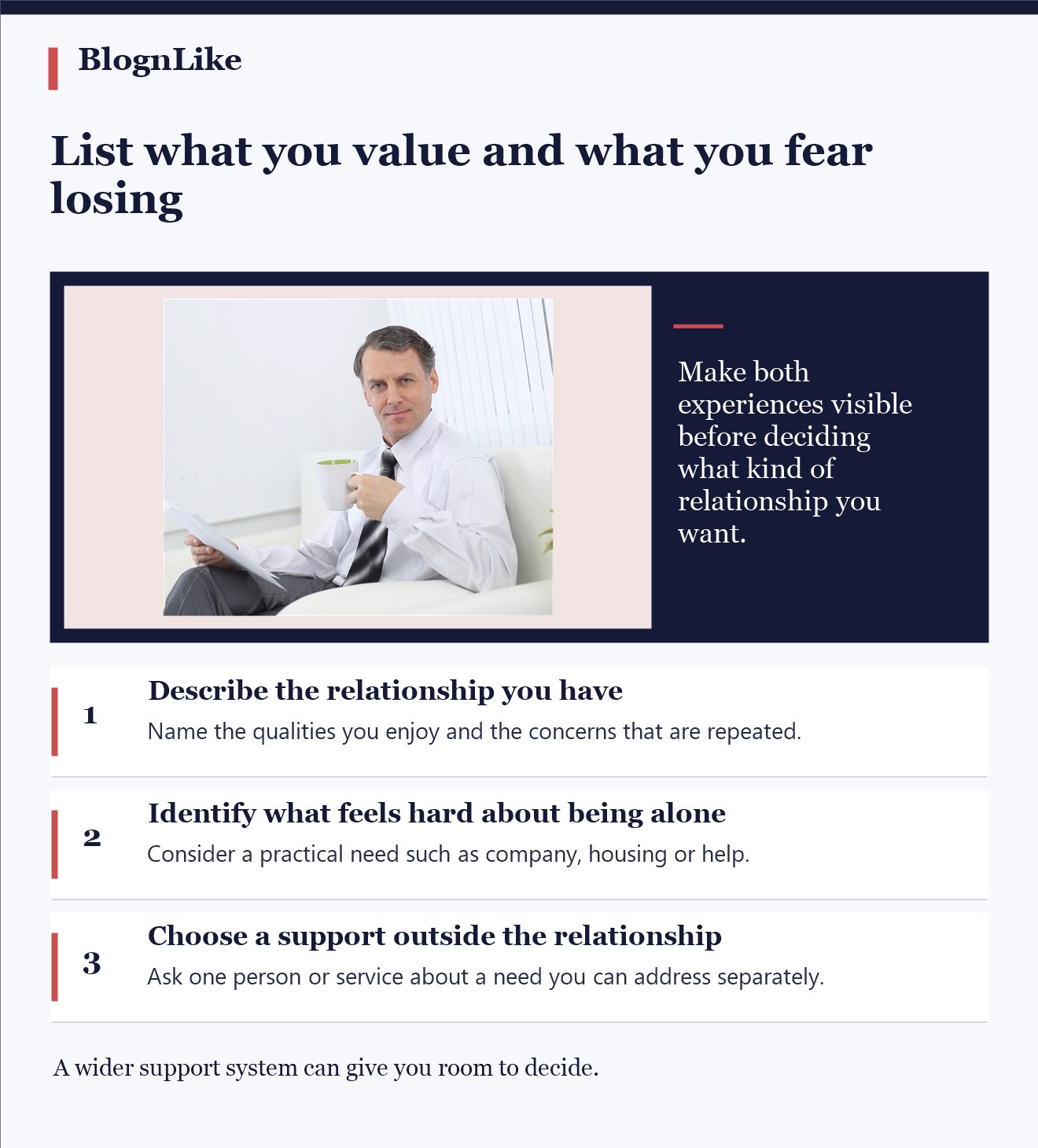
Read the infographic in text
List what you value and what you fear losing
Make both experiences visible before deciding what kind of relationship you want.
- Describe the relationship you have Name the qualities you enjoy and the concerns that are repeated.
- Identify what feels hard about being alone Consider a practical need such as company, housing or help.
- Choose a support outside the relationship Ask one person or service about a need you can address separately.
A wider support system can give you room to decide.