

When someone’s attention changes, it can be tempting to search for a way to win it back. You can express interest and ask what is happening, but you cannot make another person want a relationship. Focus on a clear conversation, a manageable pace and the kind of contact you want to take part in.
Notice a change without deciding what it means
If his replies, plans or attention have changed, begin with what you have observed. A slower reply might reflect a busy day, a different communication preference, reduced interest or something else. You cannot establish the reason by monitoring every message or comparing yourself with other people.
You do not need to become less available as a tactic or conceal an ordinary wish for contact. Consider the arrangement you actually want, including how much time and uncertainty feels manageable for you. That gives you something concrete to discuss.

Ask about the contact or relationship you want
You might say: “I have noticed we have not made plans lately. Would you like to keep seeing each other?” If you are already partners, name the change and the time together you miss. Choose wording that asks for information rather than assuming a motive.
Listen to the answer and notice what follows. A clear no should be respected. If there is no answer or no workable plan, you can choose to step back without repeatedly pursuing a response or proving that the other person has behaved badly.
Make appreciation specific and mutual
If you appreciate something he did, say what it was and why it mattered. You do not need to praise someone as a way to earn their attention. There should also be room to mention a need, a disappointment or a plan that does not work for you.
A relationship does not require one person to stay cheerful at all times. You can enjoy lighter conversation while also discussing ordinary concerns. Notice whether both people can contribute, receive care and raise an issue without being dismissed.
Make one clear invitation if you want to
You can suggest a date or another way to spend time together. Offer a concrete plan that fits your interests and circumstances, and leave room for a refusal. You do not have to guess the perfect activity that will create attraction.
If an invitation is unclear, ask whether it is a date. The guide to clarifying flirting and friendliness offers examples. Mutual interest matters more than being the person who waits, pursues or performs the expected role.
Choose a meeting that feels comfortable for both people
Time together can help you learn about each other, but you do not need to be alone in a private place to build trust. You can talk on a walk in a public area, meet at a café or choose another setting that suits both people’s access and comfort.
Ask what the other person would like, and state your own preference. Sharing more personal information or accepting physical closeness is a separate choice. Neither person owes vulnerability as proof that a connection is serious.
Be clear about exclusivity instead of creating jealousy
If you have not discussed exclusivity, ask what each person wants and explain your own intentions. If an agreement already exists, discuss a change before acting outside it. Do not date someone else as a test intended to make him compete for you.
A difference in relationship intentions may matter even when you like each other. You can decide whether the available relationship fits your needs. Another person’s wish for something different is not a challenge you have to overcome.
Keep room for the rest of your life
Continue the friendships, interests and responsibilities that matter to you. Rest or an enjoyable activity can be valuable on its own; it does not need to make you more attractive to someone else. You do not have to organise every day around whether a message might arrive.
If the connection repeatedly leaves you waiting for an answer or carrying all the planning, read about stepping back from one-sided dating effort. You can choose a limit on what you are willing to keep doing while leaving the other person free to make their own choices.
A useful next step is one you can choose for yourself: an invitation, a direct question, a boundary or some space. None guarantees a particular response. Whatever the answer, your need for clear and considerate communication remains valid.
A check-in after the regular call falls away
If evening calls stopped and you want more contact, ask “Could we set up a short weekend call? Weeknights seem busy for both of us.” Pay attention to whether the person can make a plan and offers an alternative if that time does not work.
Check how it feels to have a clearer arrangement. You can ask for enough contact to feel connected and decide what to do if the new pattern still does not fit.
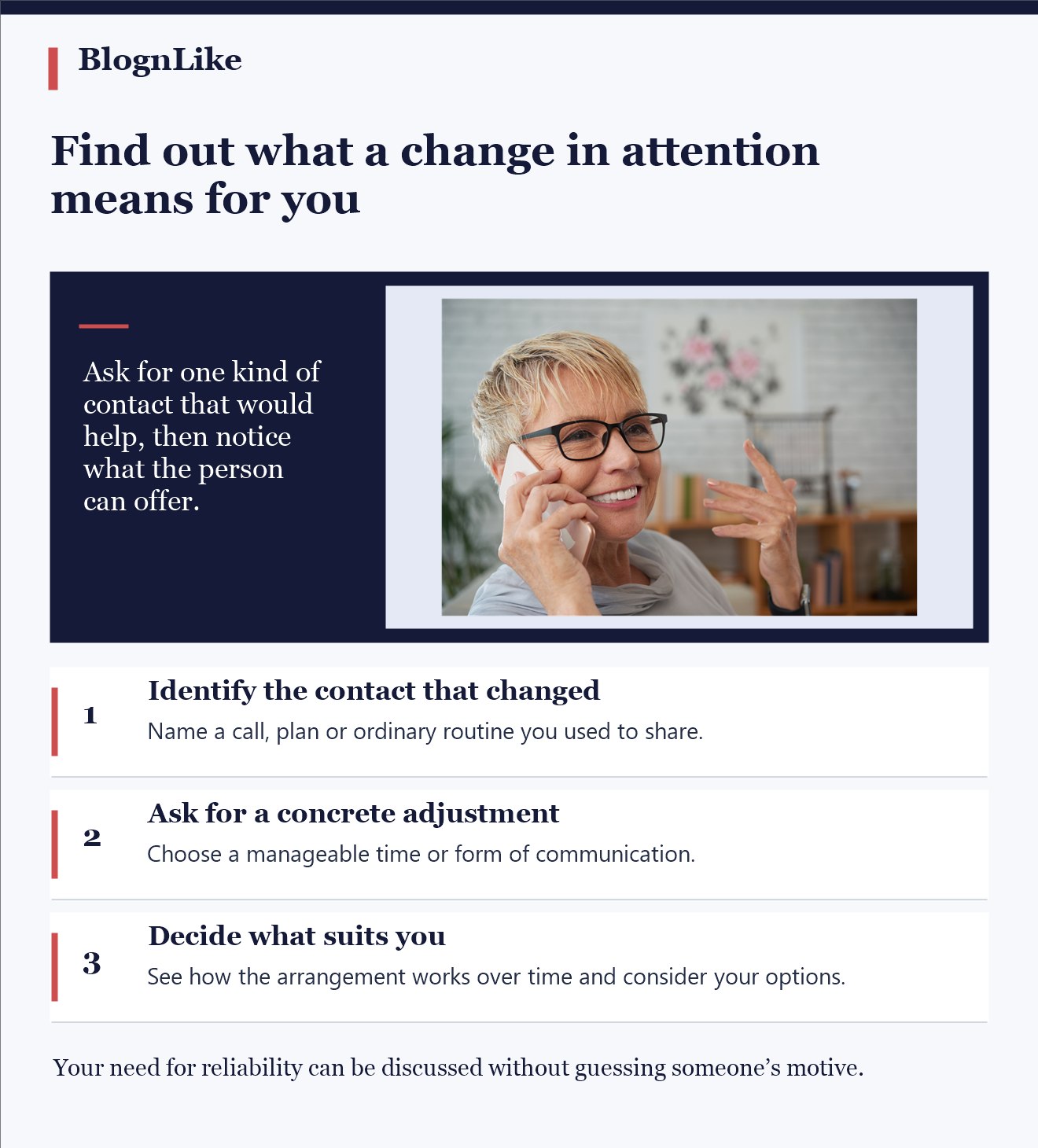
Read the infographic in text
Find out what a change in attention means for you
Ask for one kind of contact that would help, then notice what the person can offer.
- Identify the contact that changed Name a call, plan or ordinary routine you used to share.
- Ask for a concrete adjustment Choose a manageable time or form of communication.
- Decide what suits you See how the arrangement works over time and consider your options.
Your need for reliability can be discussed without guessing someone’s motive.