

Love can matter deeply and still leave practical questions unanswered. Who carries the everyday work? Can you speak honestly about a problem? Are your boundaries respected when you want different things?
A long-term relationship takes shape through the way both people respond to those questions. You do not have to preserve a constant early rush of attraction, but a loving feeling does not remove the need for care, choice and workable agreements.
On this page
Look at the care present in everyday life
Instead of deciding whether your love fits a particular category, consider how you treat each other. Can you make a request, share something important or decline something without being mocked or pressured?
Affection may look different from one relationship to another. It might include a thoughtful conversation, practical help or physical closeness that both people want. A useful question is whether the care offered is meaningful to the person receiving it.
No partner can be constantly attentive. What matters is having room to discuss a missed need and whether both people are willing to respond.

Make important agreements explicit
Being together for a long time does not ensure that you share the same understanding of commitment. Discuss the decisions that affect you: privacy, exclusivity, money, time together, children or other responsibilities.
You do not have to settle every future question in one conversation. Start with something relevant now and say what you know, what you prefer and what remains uncertain.
For example: “We have been assuming I will handle this responsibility. I want to discuss whether that still works for both of us.” An agreement should leave each person able to ask questions or propose a change.
Discuss the practical workload
Care also involves noticing what has to happen. Planning meals, remembering appointments, organising shared time and following up on tasks can take effort even when the work is less visible.
- Which responsibilities are each of you carrying?
- Who notices and plans the tasks before anyone completes them?
- What resources, time or health limits affect what is possible?
- What could be shared, simplified or supported differently?
Fairness does not always mean doing identical tasks. Aim for an arrangement both people understand and can revisit. Avoid relying on one person to manage every conversation about the imbalance as well.
Connect repair with changed behaviour
A disagreement can leave something to repair. When it is safe to talk, describe the specific action and its effect, listen to the response and identify a change you can observe.
An apology does not settle the issue by itself. Ask what will happen differently and how you will address it if the same problem returns. Neither person should have to accept repeated harm as the price of being committed.
If there are threats, coercion or fear, seek specialist support for your own safety and options. You are not responsible for finding words that make another person stop mistreating you.
Review what you both want from here
Needs and circumstances can change. Return to the agreements that matter rather than assuming time together makes the relationship permanent or obliges either person to continue.
You may find a change you both want to try. You may also discover a difference that cannot be resolved by working harder. A qualified relationship professional can be one option when both people freely want that help and the situation is suitable.
Long-term care includes respecting choice. Consider the relationship you are actually building, the changes each person is willing to make and whether continuing fits your needs.
Read the infographic in text
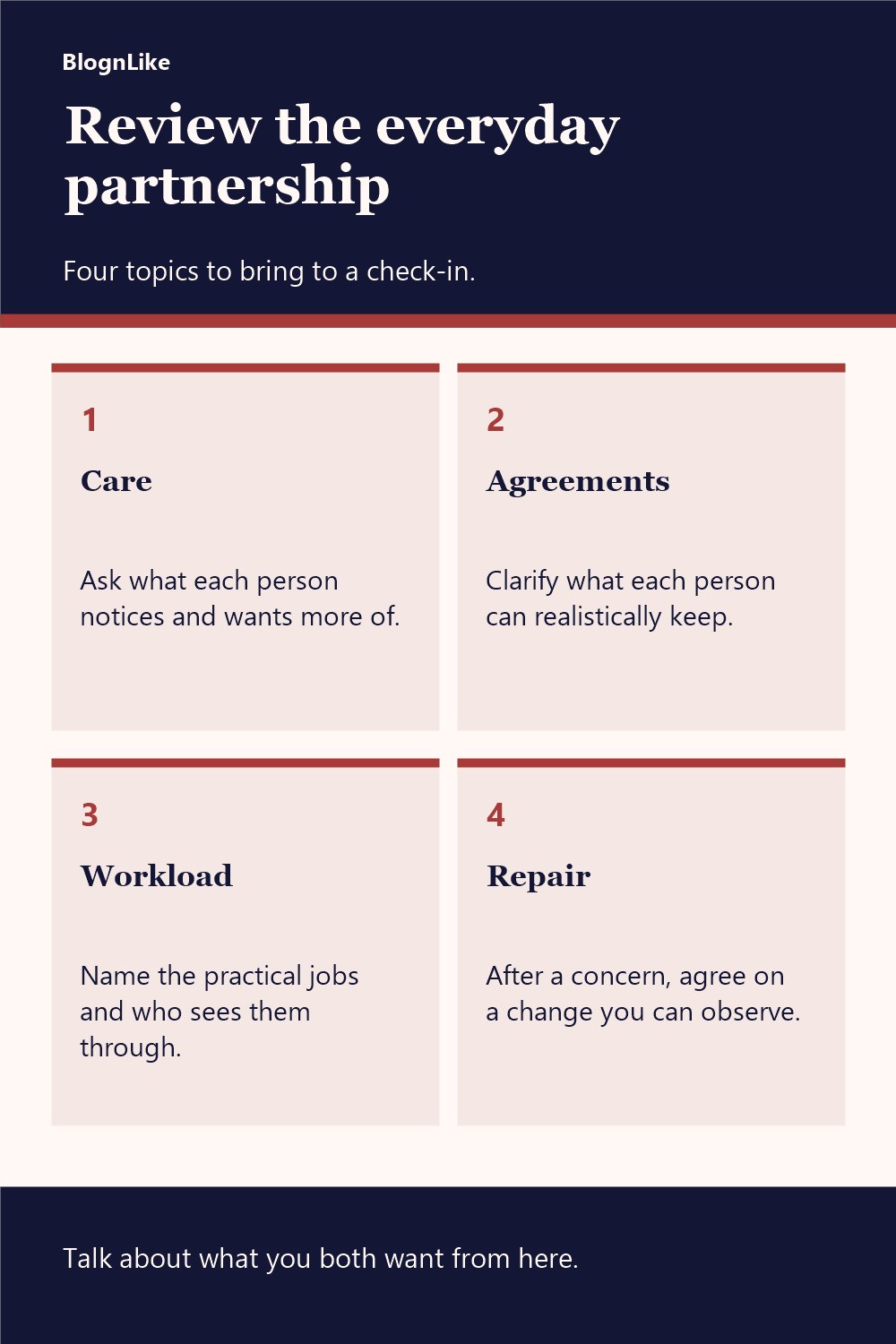
Review the everyday partnership Four topics to bring to a check-in.
- Care Ask what each person notices and wants more of.
- Agreements Clarify what each person can realistically keep.
- Workload Name the practical jobs and who sees them through.
- Repair After a concern, agree on a change you can observe.
Talk about what you both want from here.