

A close friendship outside a romantic relationship is not automatically an emotional affair. The useful questions concern the agreements you have made, whether you are misleading anyone and how your choices affect the people involved. Who hears your news first or how often you text cannot answer those questions alone.
Cleveland Clinic’s explanation of emotional cheating distinguishes it from ordinary close friendships and notes that friendships should not automatically be treated as infidelity. These seven questions offer a starting point for a specific, honest conversation rather than a test that diagnoses your relationship.
1. What agreements have we actually made?
Start with the relationship you have agreed to, rather than a universal rule about who must be your first call. Discuss romantic contact, flirting, sexual messages, time together and any other expectations that matter to you. If an expectation has never been discussed, name it as something to clarify.

2. Am I actively misleading someone?
Consider whether you are lying about the nature of a connection or hiding conduct that you know breaches an agreement. That is different from having private thoughts, confidential conversations or friendships. Privacy is not an obligation to disclose every message or give someone unrestricted access to your accounts.
3. Am I avoiding a conversation I need to have?
Getting advice or comfort from a friend does not automatically make a friendship an affair. You may still need to discuss an unresolved issue with your partner. Ask whether you are using another connection to postpone an honest decision about the relationship you are in.
4. Have agreed responsibilities or time together been neglected?
Look at concrete changes: repeatedly cancelling plans, leaving agreed work to a partner or making important shared decisions without them. Those choices deserve attention on their own terms. Watching a television programme with a friend or enjoying a hobby separately does not by itself establish infidelity.
5. Am I sharing information that is not mine to share?
Think about your partner’s privacy and the other person’s boundaries. You can seek support while limiting unnecessary identifying or intimate details. If you need confidential help about a difficult or unsafe situation, access to support should not depend on your partner’s permission.
6. How are contact and attention working for us?
Frequent texting can serve many purposes. Instead of treating a message count as proof, discuss whether contact is interrupting time you agreed to spend together and whether anyone is being misled. A request for attention can be reasonable; isolating a partner from friends or demanding surveillance is a different matter.
7. What honest action will I take now?
If you have crossed an agreement, acknowledge the choice without blaming your partner for causing it. Decide what conduct needs to stop or change, then make room for the other person to respond. They may want time, further discussion or an end to the relationship.
If you are unsure about your feelings, pause decisions that would deepen the uncertainty and think about what relationship you want. Do not promise reconciliation or a future together merely to end a difficult conversation. You can seek individual support while deciding how to act with more honesty.
A conversation might begin: “I am worried that we understand this connection differently. Can we talk about what each of us believes we agreed to?” The weekly relationship check-in can help organise one concern and one request. It cannot guarantee trust will return or require either person to stay.
If raising a concern brings threats, intimidation or pressure to give up independent support, prioritise your safety. Love is respect’s guide to boundaries explains the difference between protecting your choices and trying to control someone else.
When time spent with a friend creates confusion at home
A partner repeatedly cancels a shared plan to meet a friend and avoids explaining the changes. Focus the conversation on the plans you share. Ask what expectations you each have for schedule changes, privacy and emotional support from friends.
If you agree on changes, look at what happens during the next few weeks. You can consider how the arrangement affects trust without asking to inspect the friend’s or your partner’s private messages.
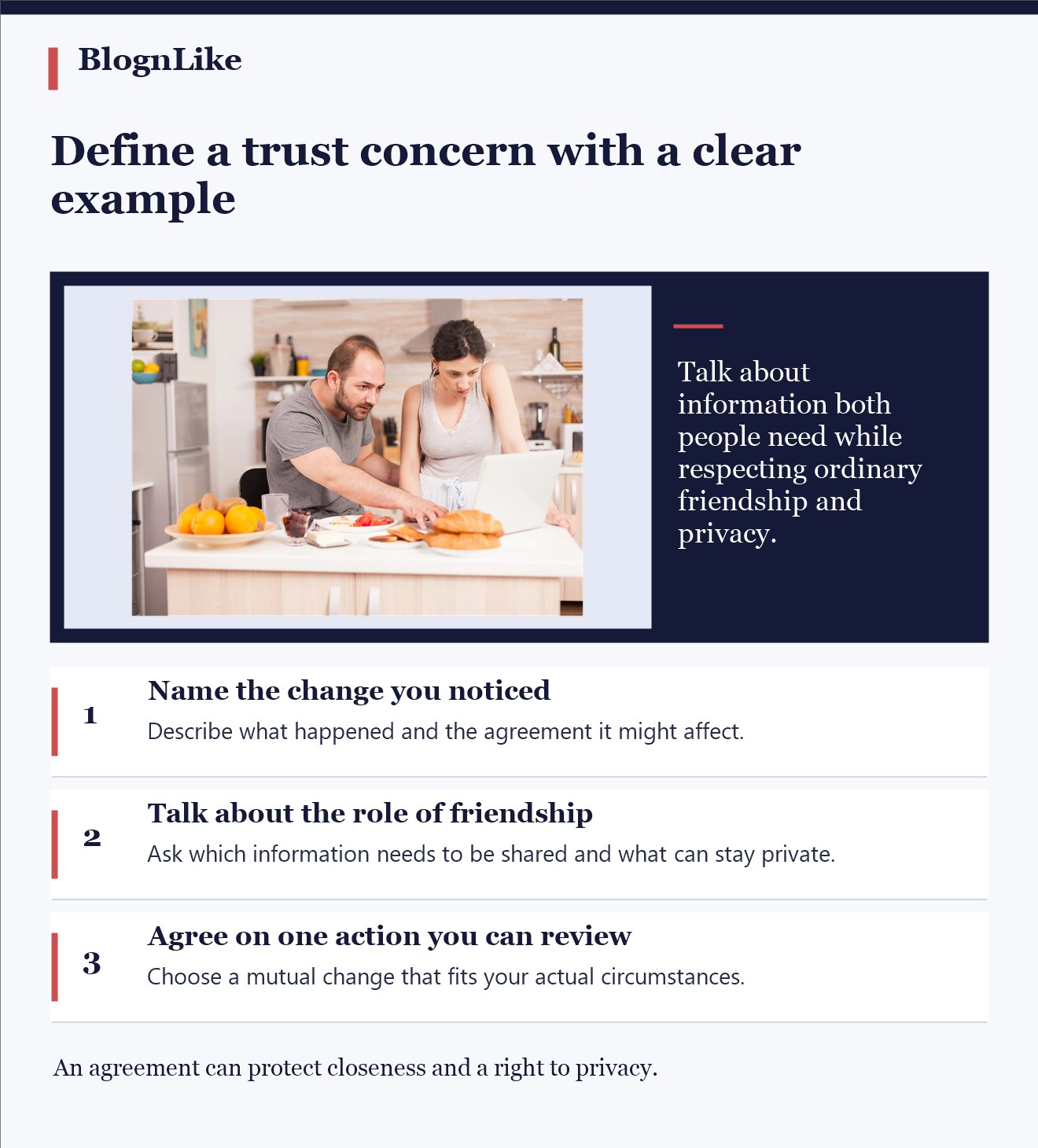
Read the infographic in text
Define a trust concern with a clear example
Talk about information both people need while respecting ordinary friendship and privacy.
- Name the change you noticed Describe what happened and the agreement it might affect.
- Talk about the role of friendship Ask which information needs to be shared and what can stay private.
- Agree on one action you can review Choose a mutual change that fits your actual circumstances.
An agreement can protect closeness and a right to privacy.