

Wanting love is understandable. The difficult part is when you find yourself doing nearly all the inviting, checking and waiting for one person. Stepping back can mean making room for a clear answer and protecting your own time, without treating dating as a contest over who cares less.
This guide focuses on one-sided effort with a particular person. If you want a wider pause from dating, the guide to taking a dating break offers a different starting point.
Freedom to make an honest choice
When dating effort feels one-sided, begin with what you have actually observed. Have you made several invitations without a clear response? Are you repeatedly rearranging your life while the other person stays vague? A pattern is useful information, even when you cannot know the other person’s motives.
If they have declined a date or relationship, respect that answer. If the situation is unclear, you can ask once: “I would like to keep dating and make plans together. Is that something you want too?” Ask because you need clarity, rather than to persuade them into a different answer.

Keep your life in the picture
You can want a relationship and still protect time for rest, interests and responsibilities. Decide what you can comfortably offer without cancelling plans that matter to you. Being single does not require constant cheerfulness, and disappointment does not mean you are failing at independence.
You might keep an evening you had planned for yourself, silence non-essential notifications or stop checking whether a message has been read. Choose changes that support your day. Deliberately delaying a reply to provoke anxiety or manufacture interest keeps you focused on managing the other person’s reaction.
Let friendship be friendship
Spend time with people you enjoy without turning every conversation into a dating strategy. You can ask a friend to listen and also say when you would rather talk about something else. Give yourself permission to accept companionship without using it to prove you are “over” someone.
A friend may notice a pattern you have missed, but you still get to decide what you want. Avoid asking friends to contact the person on your behalf, monitor them or pass along messages after they have asked for space.
Decide what effort you can offer
Mutual interest does not require identical texting habits or a perfectly equal number of invitations. Work, disability, caregiving and personal preferences can affect availability. The question is whether you can discuss those differences and reach an arrangement both people want.
Make your limit concrete: “I am happy to plan our next date, and I would like you to suggest the one after that.” Or: “I am looking for regular contact. If that is not what you want, I will step back.” A limit describes your choice; it is not a threat to make someone perform affection.
Step back without turning it into a test
You can end the pursuit even if the other person is kind, uncertain or attractive. A mismatch does not require a villain. You might say: “I have enjoyed getting to know you, but I want a more mutual connection, so I am going to leave this here.” You do not need to keep reopening the conversation for a more satisfying explanation.
Give yourself room to feel disappointed. Stepping back cannot guarantee that this person will pursue you or that someone new will appear. Its purpose is to make a decision you can live with, based on what is available now. If contact becomes unwanted, you can set a firmer boundary or use the platform’s blocking tools.
For help putting your preferences into words, Love is respect’s guide to boundaries covers emotional, physical and digital limits. A boundary should protect your choices while leaving the other person free to make theirs.
When you are always the person rescheduling
Your date cancels twice, and both times you offer a replacement. This time you could say “I’d like to see you. Would you suggest a day when you know your schedule?” Make plans with your own time in the meantime.
If they make an offer you can use, decide whether you want to meet. If they do not, you have an answer about the current level of effort without needing to keep pursuing one.
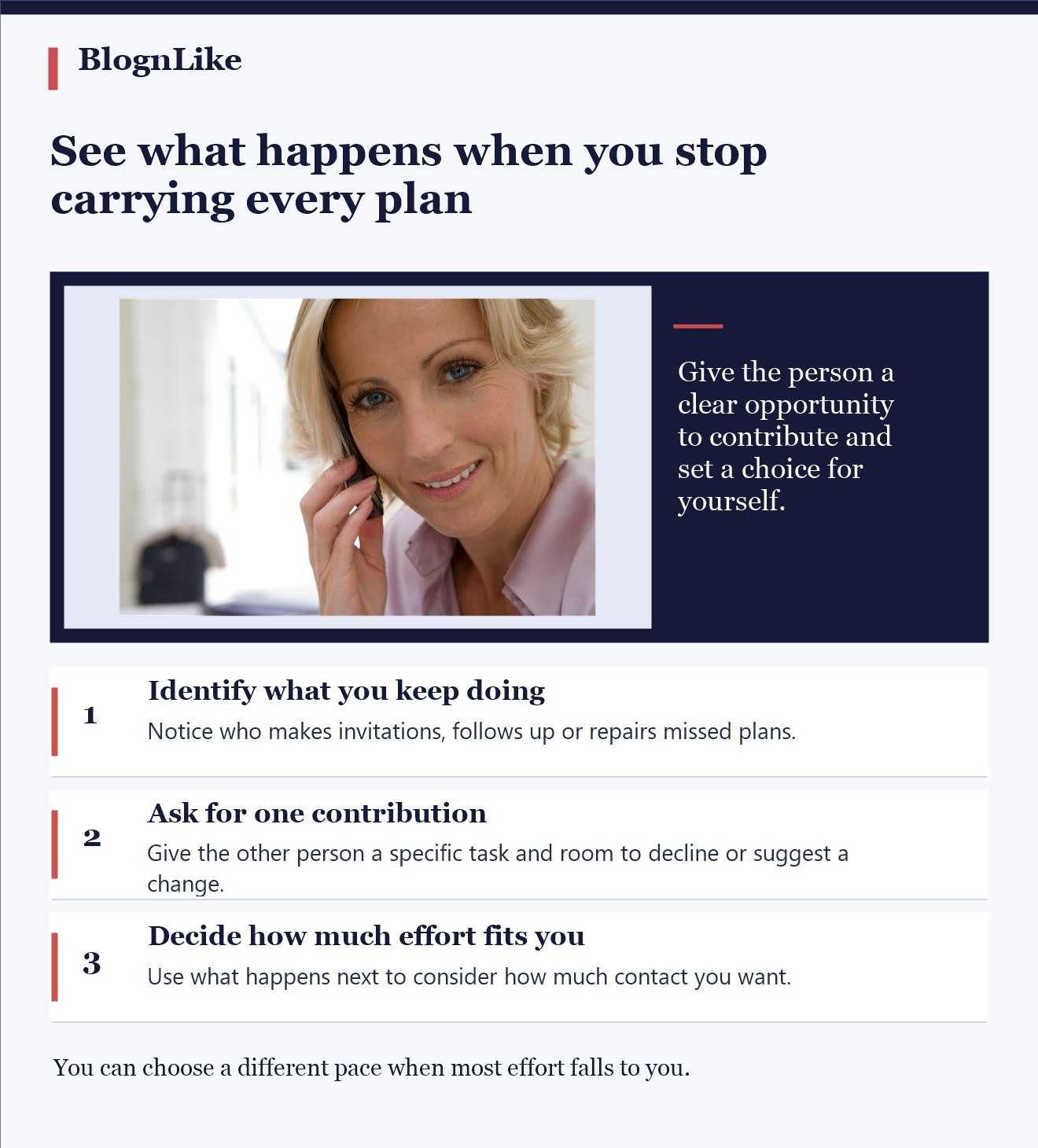
Read the infographic in text
See what happens when you stop carrying every plan
Give the person a clear opportunity to contribute and set a choice for yourself.
- Identify what you keep doing Notice who makes invitations, follows up or repairs missed plans.
- Ask for one contribution Give the other person a specific task and room to decline or suggest a change.
- Decide how much effort fits you Use what happens next to consider how much contact you want.
You can choose a different pace when most effort falls to you.