

A strong relationship needs care from both people, along with room for individual needs, limits and choices. These 18 habits offer practical ways to talk, share responsibilities and spend time together. They are prompts to adapt, rather than a checklist that guarantees a lasting relationship.
Start with one area that matters to you now. You can invite a conversation and choose your own actions; you cannot do another person’s share of the relationship for them.
Choose one habit to discuss
Ask: “What is one thing we could make easier for each other this week?” Listen to both answers, then agree on a small action you can realistically try. You do not need to work through all 18 points in one sitting.

Respect and everyday care
1. Accept differences without excusing harm
You can respect a partner’s preferences without sharing all of them. Ask which differences are easy to live with and which affect an important need. Acceptance does not require tolerating humiliation, coercion or repeated disregard for a limit.
2. Make room for imperfect days
Busy periods, illness and changing responsibilities can affect time together. Talk about what is happening instead of expecting constant romance. A difficult week needs a workable response; it does not make every hurtful pattern something you must accept.
3. Make decisions together
Use “we” when a decision really belongs to both of you, while leaving each person a voice. A shared plan should include both people’s priorities. Check consent before volunteering your partner’s money, time or labour.
4. Express specific appreciation
Name something you noticed: “Thank you for taking care of dinner when my meeting ran late.” Keep gratitude voluntary and specific. Appreciation should not become a way to discourage someone from asking for a fairer division of work.
5. Create ordinary moments of kindness
Small considerate actions can be part of everyday life: making room to listen, checking a preference or keeping an agreement. There is no kindness quota that cancels out harm. If something hurtful happened, address it directly instead of balancing it against gifts.
Connection and space
6. Stay curious about each other
Ask about a current interest or try an activity you both freely choose. Keep the cost and energy involved realistic. You do not need constant novelty, and either person can decline an activity without being accused of spoiling the relationship.
7. Enjoy play that both people welcome
Humour, a game or a shared joke can be enjoyable when both people are comfortable. Notice the response rather than assuming teasing is affectionate. If a joke embarrasses or hurts your partner, stop and listen instead of insisting they should find it funny.
8. Protect time apart
Discuss time for friends, interests and rest as well as time together. Space is not automatically rejection. Be clear about plans that affect each other, without demanding location tracking, passwords or permission for ordinary independent activities.
9. Ask about affection
Find out which forms of touch feel welcome and when. Holding hands or sitting close may suit one moment; quiet space may suit another. Nobody owes physical affection to prove commitment. Our guide to care, comfort and consent can help start that conversation.
Repair and support
10. Apologise and follow through
Describe what you did, acknowledge its effect and say what you will change. Leave the other person room to respond in their own time. A hug or kiss is not a required part of an apology, and forgiveness cannot be demanded.
11. Notice what works and what needs attention
You can value the good in a relationship while raising a concern. Instead of a global criticism such as “You never care,” choose a concrete issue: “I need us to agree who cleans the kitchen.” A positive outlook should leave room for honest disagreement.
12. Choose rituals that fit your lives
A morning conversation, a weekly walk or a quiet meal can give you regular time together. Agree on something manageable rather than copying another couple’s routine. Review it when schedules or access needs change; missing a ritual is a reason to talk, not keep score.
13. Speak with care
Pause before insults, threats or sharing private information about your partner. Being careful with words does not mean suppressing a concern. Say what happened, how it affected you and what you are asking for, while allowing the other person to disagree.
14. Ask what support would help
Offer a practical choice: “Would you like me to listen, help with this task or give you some quiet?” Share recurring responsibilities clearly. Supporting someone’s goals does not require abandoning your own, and help should not create a debt of affection.
Honesty and shared direction
15. Share at a pace you choose
Emotional intimacy can include honest feelings, needs and fears. You decide what to disclose and when; a partner is not entitled to every detail of your history. For more, explore building an emotional connection through listening and respect.
16. Make promises you can keep
Choose actions that match your words and your actual capacity. If a plan changes, communicate and help arrange the next step. A thoughtful gesture can be welcome, but consistency with agreed responsibilities matters too. Avoid promises made only to end an uncomfortable conversation.
17. Handle disagreement without punishment
Stay with one issue and allow each person to speak. If a pause would help, agree when you can return to the discussion. You do not have to resolve everything before bed. Threats, intimidation and pressure are not fair negotiation, and the person targeted is not responsible for fixing them.
18. Set a shared goal and review it
Pick something both people want, such as sharing a household task or setting aside time together. Define who will do what and when you will check back. Progress should not depend on one person managing every reminder. Celebrate what works and adjust what does not.
If you are unsure whether a pattern is ordinary conflict or something more concerning, Love is respect’s relationship spectrum explains healthy, unhealthy and abusive behaviour. Feeling afraid to disagree deserves attention beyond a communication checklist.
For a structured next conversation, try the weekly relationship check-in. Choose one concern, one request and a time to revisit the agreement.
A brief check-in around a weekly rhythm
Use the time while making breakfast on Sunday to ask, “What is one thing coming up this week that will need extra care?” Choose an action such as starting dinner on a busy evening or making a short trip together.
See whether the action happened and which part made a difference. One specific routine you can repeat may be more useful than trying to add a long list of habits all at once.
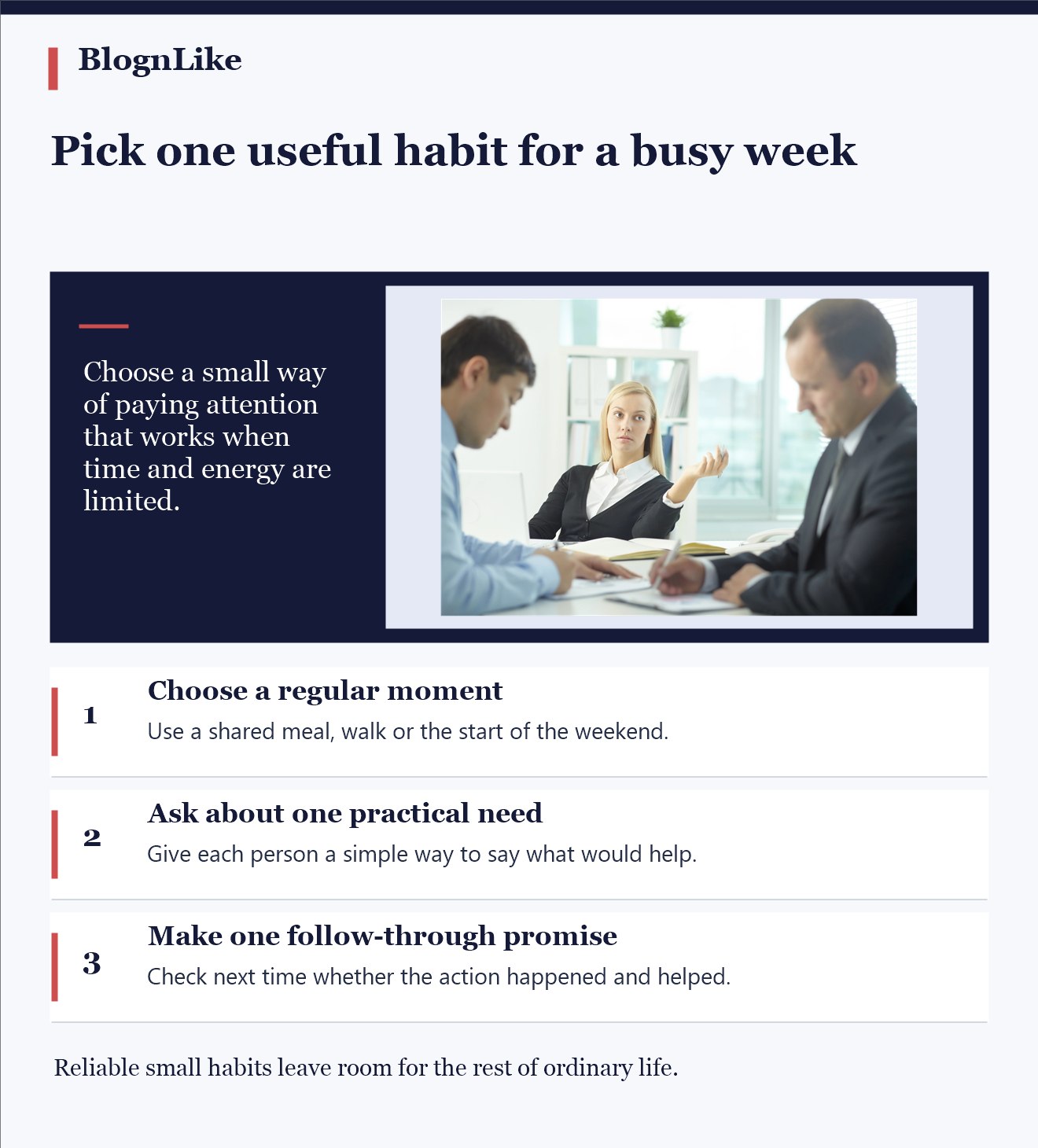
Read the infographic in text
Pick one useful habit for a busy week
Choose a small way of paying attention that works when time and energy are limited.
- Choose a regular moment Use a shared meal, walk or the start of the weekend.
- Ask about one practical need Give each person a simple way to say what would help.
- Make one follow-through promise Check next time whether the action happened and helped.
Reliable small habits leave room for the rest of ordinary life.