

When a relationship feels different, you may wonder whether love has faded or something needs attention. These ten observations are starting points for conversation. They cannot establish another person’s feelings, and you do not have to turn every change into evidence of rejection or betrayal.
If you are questioning your own feelings, ask what you want to share, what no longer fits and what you need to understand. Affection, compatibility and satisfaction can raise different questions. You can care about someone while deciding that the available relationship is not what you want.
Time, interests and expectations
1. Time together has changed
Notice the plans you make, what is kept and whether there is room to discuss time together. Spending time with friends does not prove a lack of love, and a partner should not have to give up friendships to reassure you. Ask about the specific arrangement you miss or want.
2. Separate interests have become a point of tension
Hobbies and independent time can be welcome parts of a relationship. The question is whether the arrangement works for both people. Instead of labelling an interest an obsession, describe a concrete effect: “We have not had an evening together this month, and I would like to plan one.”
3. You are treating appearance as a test of affection
A change in weight, clothing or grooming does not tell you whether someone loves you. Avoid making a person’s body the evidence for a relationship verdict. If a practical issue affects shared life, discuss that issue respectfully rather than using appearance to measure effort or worth.

Affection and communication
4. Affection or touch feels different
You can notice that you miss a kind of closeness and ask what each person wants now. Less cuddling or hand-holding is not proof of cheating. Do not initiate unwanted touch as a test, or assume a past preference creates permission today. Both people can describe what feels comfortable.
5. Everyday conversation has become less satisfying
You may miss hearing about each other’s day or having an interested response to something important. Ask about a time and kind of conversation that would work for both people. A short reply on one occasion does not establish indifference; a recurring pattern can still deserve a direct discussion.
6. Concerns stay unspoken or unresolved
A partner may want privacy or need time before discussing something personal. That is different from leaving every shared concern indefinitely unaddressed. You can ask when to revisit a practical problem and what information affects a decision you need to make, without demanding access to every thought or account.
7. A conversation feels harder to take part in
Look at whether you can both speak, ask questions and decline a request. Eye contact alone is not a test of honesty or affection. Focus on what was said and done, whether you understood each other and what happens after a concern is raised.
Comparison and future hopes
8. Other relationships have become a measuring stick
Seeing another couple can bring up a wish, disappointment or comparison. It does not reveal what your partner secretly wants. Try naming the particular experience you would value, such as more shared time or clearer plans, rather than asking your relationship to copy someone else’s appearance.
9. Your future expectations need a clearer discussion
If a topic such as commitment, children, location or living together matters to you, ask about it directly. A pause in the conversation does not prove that someone has planned a future without you. An important difference can still affect your decision, even when neither person is at fault.
10. You want a different kind of closeness
Friendship, romance, sex, shared routines and emotional intimacy matter differently to different people. Discuss what you each want instead of assuming every relationship must look the same. A caring friendship can be valuable while still differing from the relationship one person hopes to have.
Choose one clear next step
Name one change you have noticed, explain its effect and ask a question. For example: “I miss our time together. Would you like to plan a regular evening, or has what you want changed?” Listen to the answer and notice the follow-through rather than relying on a list to decide for you.
For a structured conversation, try the weekly relationship check-in. If the question is whether love and fear of loneliness are mixed together, read about reflecting on love and being alone.
If you fear threats, retaliation or control, you do not need to confront someone privately before seeking confidential support. Love is respect’s relationship spectrum can help you consider behaviour and safety alongside the question of what you feel.
Name the lost routine without deciding why it stopped
You used to take a walk together twice a week and have not done it since one person changed jobs. Ask “Would you still like a regular walk together? I’ve missed that time with you.” Listen to whether they explain the schedule, prefer another activity or want a more serious conversation.
If both people want more time, choose a new routine that would work on an ordinary week. If they tell you they want to end the relationship, consider your needs and practical plans from there.
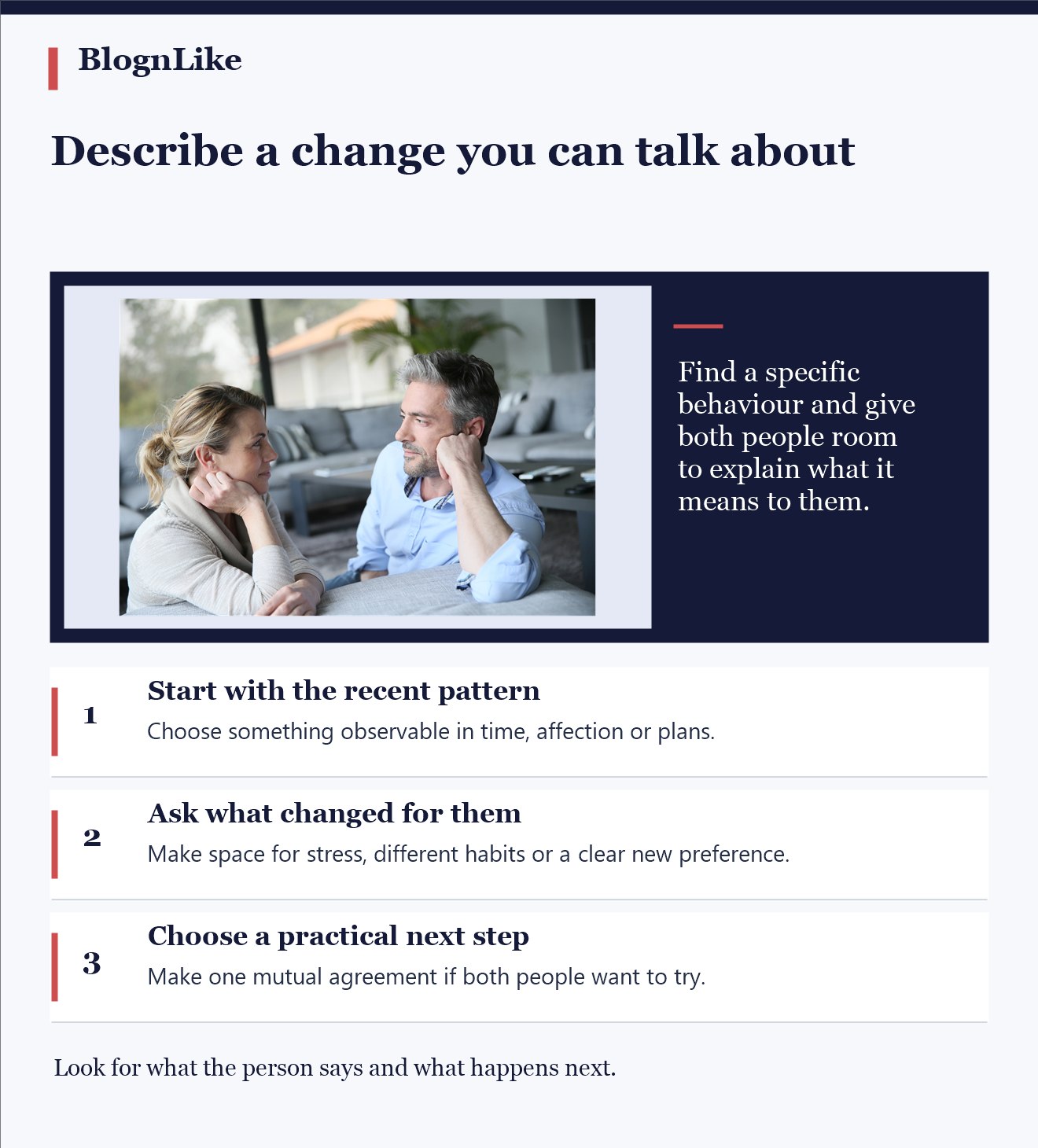
Read the infographic in text
Describe a change you can talk about
Find a specific behaviour and give both people room to explain what it means to them.
- Start with the recent pattern Choose something observable in time, affection or plans.
- Ask what changed for them Make space for stress, different habits or a clear new preference.
- Choose a practical next step Make one mutual agreement if both people want to try.
Look for what the person says and what happens next.