

A new relationship can feel exciting and still be moving faster than you want. You are allowed to pause a decision, ask for more space or stop dating. The central question is whether your choices and limits are respected.
You cannot know someone’s intentions from speed alone. Consider what is happening, how you feel about it and how the other person responds when you say what you want.
Separate enthusiasm from pressure
Someone may feel excited about a new connection, talk about hopes or introduce you to friends early. Those actions alone do not prove manipulation or predict that they will disappear. Look at whether you can choose a different pace without being punished.
Pressure can include repeated requests after a refusal, guilt about needing space, demands for constant availability or treating a future plan as something you have already agreed to. Focus on those behaviours rather than trying to diagnose the person behind them.

Say what a comfortable pace means
Choose a specific request when you feel safe doing so. For example: “I would like to keep seeing you, but I am not ready to discuss moving in,” or “I need evenings when I am not messaging.” You can also say that you do not want another date.
A slower pace does not have to follow a universal timeline. Decide what information and experience you want before a particular choice. Consent to one date, a kiss or a relationship does not automatically extend to sex, exclusivity or sharing a home.
Keep practical decisions separate
It is possible to enjoy romance without combining finances, sharing passwords or making a housing decision. Take each commitment on its own terms. Ask what it involves, what each person wants and whether you have had enough time to think freely.
Keep contact with friends and other sources of support. You do not need to abandon routines or relationships because someone says a new romance should be your entire world. A private conversation with someone you trust can help you hear your own preferences.
Notice the response to your limit
An answer may be disappointed and still respectful: the person listens, accepts your decision and adjusts their expectations. Pay attention if a stated agreement is repeatedly ignored or your limit is treated as a challenge to overcome.
You do not need to keep explaining the same refusal until the other person approves of it. If your needs differ, you can decide that the relationship is not suitable. The guide to mutual dating effort and stepping back offers examples of clear wording.
Choose support if you feel afraid
If setting a limit brings threats, intimidation, unwanted contact or pressure for sexual activity, prioritise support. You do not have to arrange a private meeting to explain yourself or prove that your concern is justified.
Love is respect’s boundaries guide explains emotional, physical and digital limits, including why fear about a partner’s response deserves attention. You can use support to consider options that fit your situation.
If you recognise that you are pushing
Ask whether you have been making invitations that leave room for a refusal, or treating your hopes as shared plans. If someone asks for space, respect the request. Repeated messages, gifts or appeals through mutual friends do not turn a no into mutual interest.
You can feel disappointed without making the other person responsible for relieving it. Take time to reflect on what you want and how to express it without pressure. If the pattern keeps causing problems, you can seek appropriate support to work on it.
When someone wants to move in before you are ready
You enjoy dating but are being asked to decide immediately about sharing a home. If it feels safe, say “I’m happy to keep dating. I need time before talking about moving in.” Decide which information and conditions you would need before reconsidering.
Notice whether they respect the pause and whether you feel free to say no. If the answer feels unsafe to give, speak privately with someone who can help you consider your options.
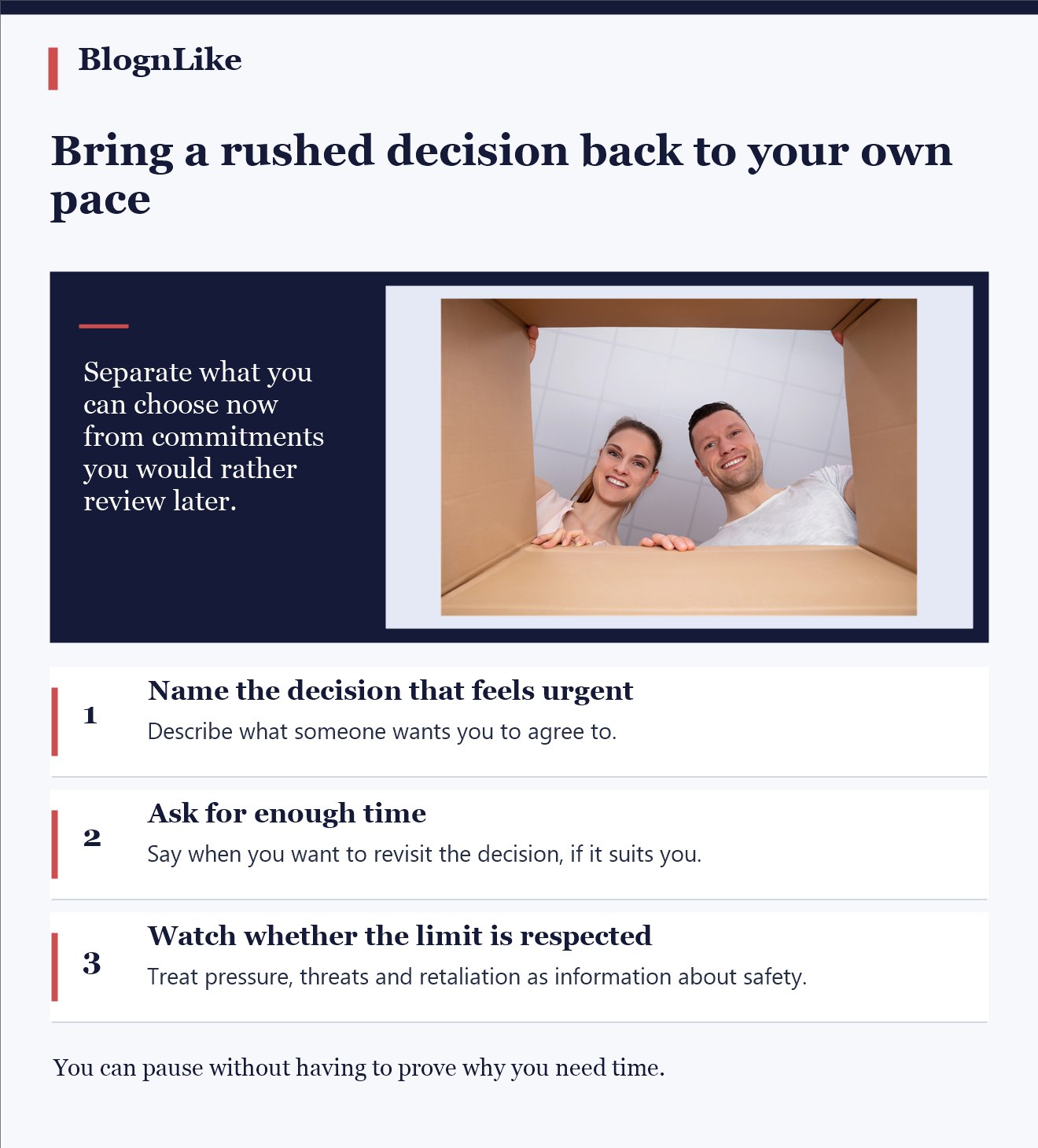
Read the infographic in text
Bring a rushed decision back to your own pace
Separate what you can choose now from commitments you would rather review later.
- Name the decision that feels urgent Describe what someone wants you to agree to.
- Ask for enough time Say when you want to revisit the decision, if it suits you.
- Watch whether the limit is respected Treat pressure, threats and retaliation as information about safety.
You can pause without having to prove why you need time.