

If you are wondering whether someone is flirting or simply being friendly, a single gesture rarely answers the question. You can enjoy the interaction, notice your own interest and ask a clear question without needing to decode every glance or message.
These twelve points help you separate observations from assumptions. Friendship is valuable in its own right. No amount of friendliness creates a promise of romance, and you do not need to persuade someone to move out of a “friend zone.”
Attention and physical cues
1. Focused attention is worth a conversation, not a conclusion
A person who pays attention to you may enjoy your company, share an interest or feel attraction. You do not need to decide which from one interaction. Notice what actually happened, and leave room for the person to explain what they want.
2. Check the response to an invitation
A willing response to a clear date invitation gives you something more useful than a guess about a smile. If a person declines, changes the subject or does not respond, avoid treating that as encouragement to keep trying. They can choose whether to suggest another plan.
3. Keep physical closeness comfortable
Someone may stand close because of noise, space or personal style. Proximity and incidental touch do not establish romantic interest or permission for more contact. If you want to move closer or touch someone, leave room for their choice and respect any request for space.
4. Do not make eye contact a test
People differ in how much eye contact feels natural or comfortable. A sustained gaze can have several meanings, and looking away does not tell you that someone lacks interest. Pay more attention to a conversation you can both participate in freely than to a rule about where someone looks.

Conversation and context
5. Curiosity can be part of friendship too
Asking about your life may show interest in knowing you. A close friend can also ask thoughtful questions and remember details. You can appreciate that attention without deciding it must be romantic or suggesting that friendship is necessarily shallow.
6. A smile or gesture does not have one fixed meaning
Leaning forward, smiling or being animated may be friendly, flirtatious or simply part of how someone communicates. Do not turn a gesture into a secret code. If the interaction is welcome, continue the conversation; if someone seems uncomfortable or disengages, give them room.
7. Being single is not an invitation by itself
Mentioning relationship status can be relevant information, but it is not a request to date every person who hears it. If you want to ask someone out, make your interest clear and give them an easy way to decline. Avoid assuming that availability means attraction.
8. Private conversation should remain a choice
Someone may prefer a quieter place to hear you, or may simply want to stay with the group. Ask before changing location and accept a preference to remain where they are. Being singled out is not automatically romantic, and comfort matters more than creating a supposedly perfect moment.
Playfulness, invitations and texts
9. Teasing is useful only when it is welcome
A playful exchange can be enjoyable when both people like it. It can also be awkward or hurtful. Do not use insults or embarrassing details to test attraction, and do not assume that tolerating a joke means someone wants romance. Listen if they ask you to stop.
10. Repeated contact does not create a debt
A person may seek you out because they enjoy friendship, want to collaborate or hope to date. You can ask about their interest without recruiting friends to investigate private feelings. Time, compliments and attention do not create an obligation to return affection.
11. Clarify whether a plan is a date
A dinner, exhibition or walk can be friendly or romantic. If the distinction matters, ask: “Would you like this to be a date, or are we meeting as friends?” You can also make your own invitation specific. A clear answer lets both people decide whether the plan fits.
12. Treat texts as a conversation, not a puzzle
Emojis, jokes and response times are easy to interpret in different ways. Ask when the meaning matters, and avoid escalating sexual messages or images without agreement. A person may enjoy flirting while not wanting a relationship or any further physical contact.
Ask a clear question and respect the answer
You might say: “I have enjoyed talking with you, and I would like to invite you on a date. Would that interest you?” Choose a moment that leaves room for an honest answer. If the answer is no, you can acknowledge it without bargaining or asking for a justification.
For physical or sexual intimacy, Love is respect’s consent guide explains why flirting is not permission for further contact. Agreeing to a date also leaves each person free to change their mind about what happens next.
If the person is already a friend, read about talking about romantic feelings for a friend. The aim is to find out whether interest is mutual while leaving both people free to choose.
A direct question that leaves room for friendliness
You’ve chatted several times after a class and think there might be romantic interest. Ask “Would you be interested in getting coffee as a date sometime?” If the other person prefers friendly contact, allow that answer without asking them to justify it.
If you want to keep attending the class, keep the same courtesy as before. Take extra space if you need it without making the other person responsible for your disappointment.
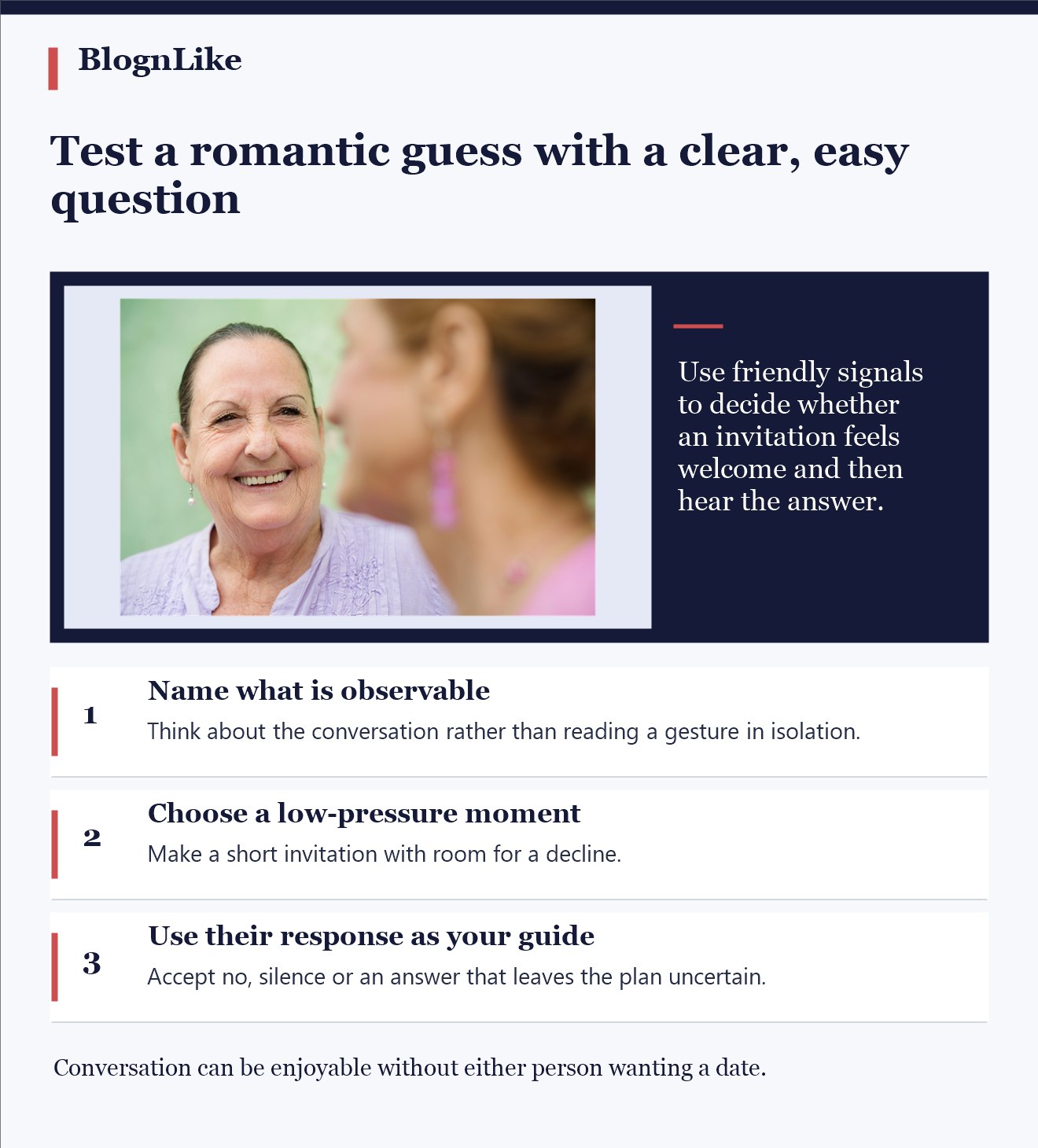
Read the infographic in text
Test a romantic guess with a clear, easy question
Use friendly signals to decide whether an invitation feels welcome and then hear the answer.
- Name what is observable Think about the conversation rather than reading a gesture in isolation.
- Choose a low-pressure moment Make a short invitation with room for a decline.
- Use their response as your guide Accept no, silence or an answer that leaves the plan uncertain.
Conversation can be enjoyable without either person wanting a date.